
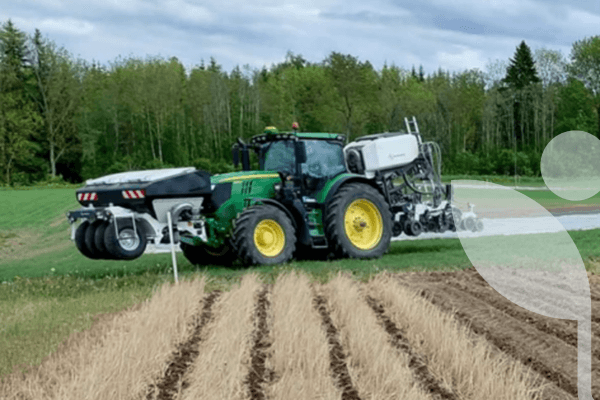
The growing season is well underway at NIBIO’s Apelsvoll Research Station. Two field trials have been established toI investigate how cover crops can improve soil health and make horticultural production more sustainable and resilient. NIBIO is using the trials to test if cover crops are suitable for vegetable production, and if they can improve soil compaction.
Year-round soil cover for vegetable production
The first trial is exploring if cover crops can maintain year-round soil cover while enabling the production of high-value vegetable crops. Winter rye was grown over winter and terminated in spring using either a power harrow, a mulcher, or glyphosate. Onions and broccoli were then established using a strip-till system, where only narrow planting strips were cultivated, leaving most of the soil undisturbed and protected by crop residues (Figure 1 and2). This approach may reduce erosion and fertiliser use, improve soil moisture retention, and protect soil structure while ensuring successful crop establishment.
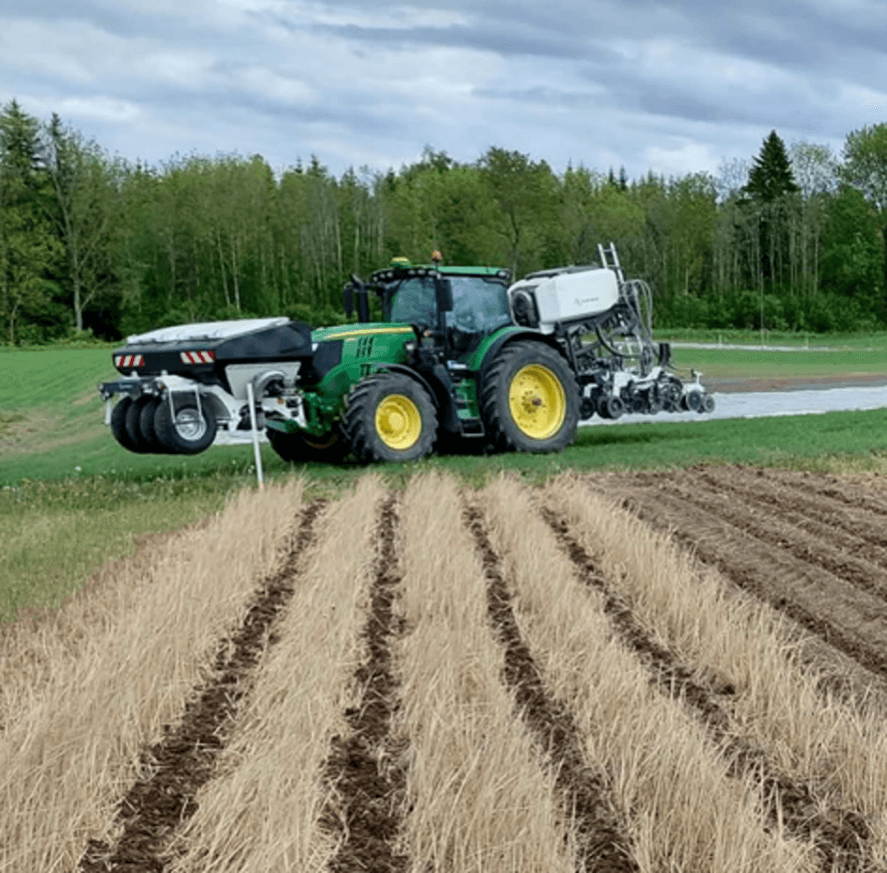
Figure 1. After termination of the cover crop, planting strips were created directly in the remaining biomass before establishing onions and broccoli. By disturbing only, a small portion of the soil, the strip-till system combines efficient crop establishment with the benefits of year-round soil cover (Photo: A. Freberg)
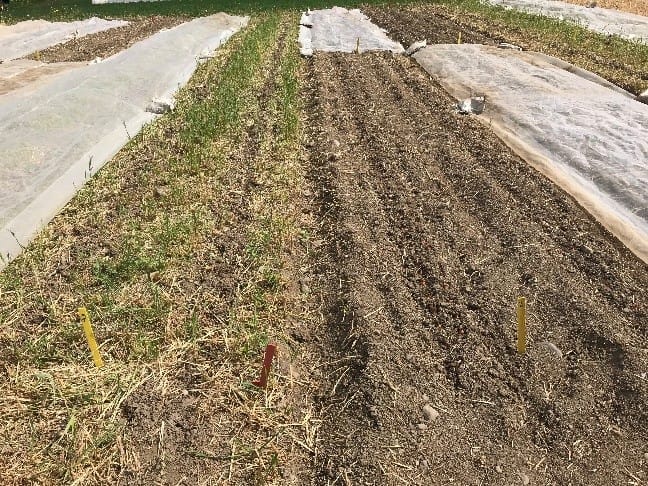
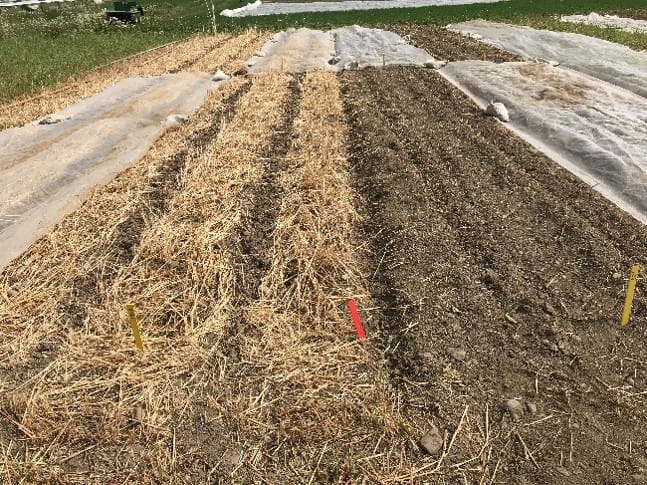
Figure 2. Three different methods applied for termination of cover crops combined with strip till cultivation system for onion and broccoli. From left to right: mulched/power harrowed, glyphosate. (Photo. M. Thomsen)
Use of cover crops to alleviate soil compaction
The second trial investigates whether cover crops can function as “biological subsoilers” and help alleviate soil compaction. Experimental plots were mechanically compacted using heavy machinery how much before sowing Italian ryegrass, oilseed radish, and lupin,three species with distinctly different rooting characteristics and winterhardiness. The cover crops produced substantial amounts of biomass, particularly in the non-compacted treatments.
In spring, the cover crops was terminated using glyphosate combined with either power harrowing or no tillage. In both cases the same strip-till technology as in the first trial was applied to establish cauliflower from plantlets (Figure 3). Researchers will evaluate how the different cover crop species and termination methods influence soil structure, crop growth, and yield.
Together, these trials are generating valuable knowledge on how cover crops, reduced tillage, and innovative cultivation techniques can improve soil health and strengthen the resilience of horticultural production systems. The results will help farmers develop cropping systems that are better equipped to cope with climate change while maintaining productivity and reducing environmental impacts.