
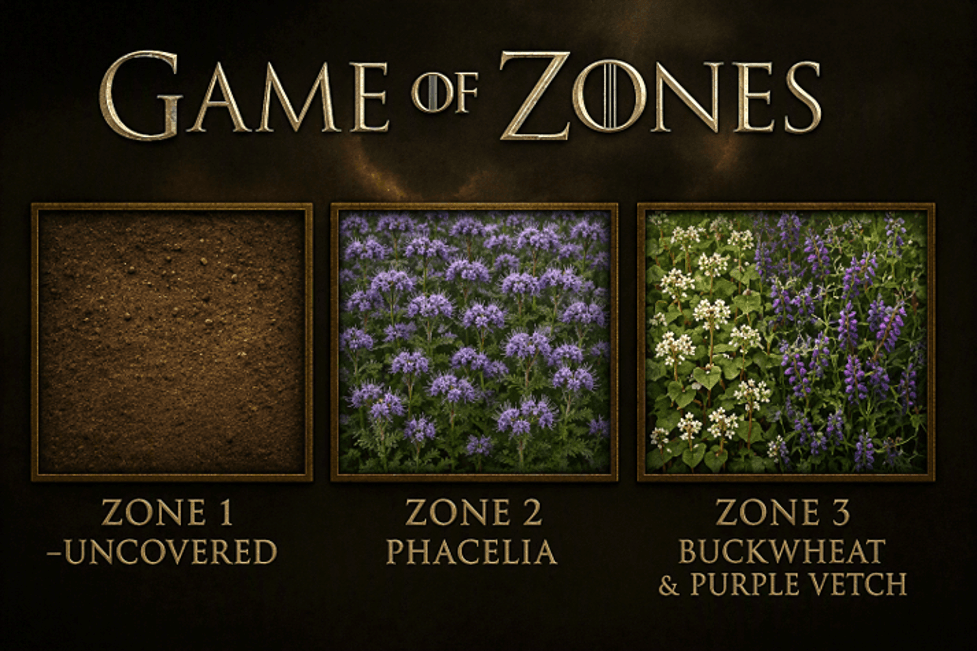
Hort2thefuture’s “Game of Zones” citizen science initiative explores the benefits of cover crops in gardens and allotments.
Gardeners in the northeast of England are taking part in a new citizen science experiment investigating whether cover crops can improve soil health and boost subsequent crop yields.
The “Game of Zones” themed initiative, launched by researchers at Newcastle University, as part of the Hort2thefuture project, encourages gardeners to trial two cover crop options: phacelia and a buckwheat and purple vetch mix, sharing their findings.
Cover crops are grown to protect and enhance the soil rather than for harvest. While increasingly planted by farmers, less is known about their effectiveness in amateur gardening settings, and allotment holders seldom grow them. Researchers hope that by harnessing the enthusiasm and observations of gardeners, the initiative will generate valuable insights into how cover crops perform in real-world garden conditions.
Many allotments and vegetable plots in home gardens are left bare after summer harvesting, leaving soils vulnerable to nutrient loss, erosion, and reduced biological activity during autumn and winter. Prior Hort2thefuture research with professional growers demonstrates that cover crops can help retain nutrients, reduce soil erosion, and improve soil health. The new initiative aims to discover whether similar benefits can be achieved by hobby gardeners.
Participants divide a garden bed or allotment plot into two or three zones, leaving one zone bare while sowing one or two cover crops this Autumn on the other(s). Next spring and summer, gardeners will compare the zones, assessing factors such as earthworm activity, ease of cultivation, and crop performance. Professor Steve Quarrie devised the experiment, with the initiative developed with the assistance of Anton Rosenfeld at Garden Organic and the Enrich the Earth coalition.
Participants receive free cover crop seeds and advice, insights into their soil health, the opportunity to compare results with other gardeners as part of a community, and recognition as a Citizen Scientist. Gardeners in the northeast of England interested in joining the citizen science experiment can sign up using this form.
Chista Zarei, one of the organisers of the experiment at Newcastle University notes: “Professional growers are increasingly using cover crops to improve soil health and sustainability, but we know much less about how they perform in home gardens and allotments. Through our initiative, gardeners can contribute directly to research while testing practical approaches to improving the health and productivity of their soils.”
ENDS